Manual water pumps offer a vital solution where centralized systems are unavailable, providing accessible water through human power—a crucial need globally.
Defining a Manual Water Pump
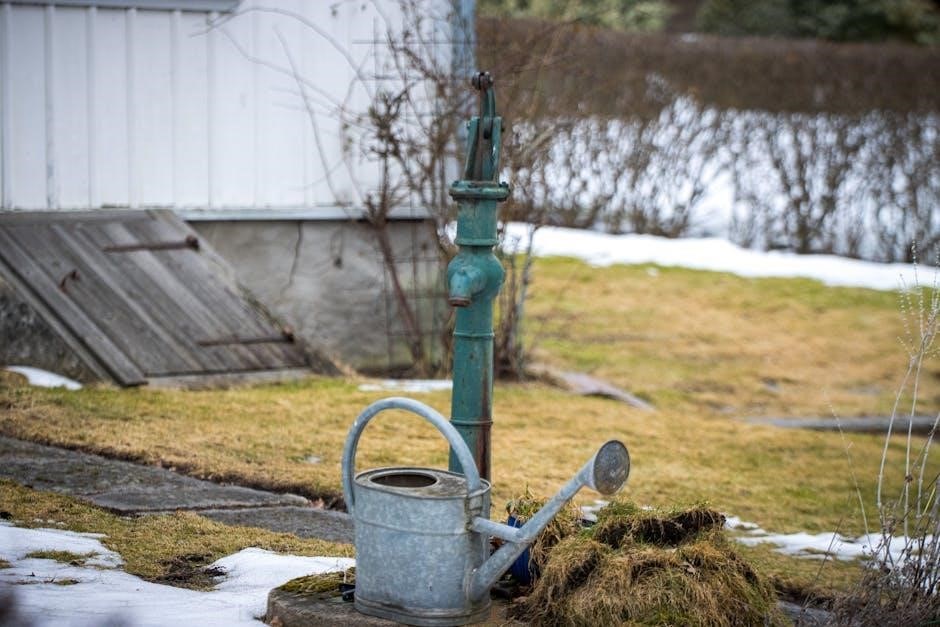
A manual water pump is a mechanically operated device designed to lift or move water utilizing human physical effort, rather than electrical power or an internal combustion engine. These pumps function by creating a partial vacuum, drawing water into a cylinder, and then displacing it upwards through mechanical action.
Essentially, they convert reciprocating motion – typically from a handle – into fluid movement. This makes them incredibly valuable in situations lacking reliable electricity access, or where a simple, robust water-lifting solution is paramount. The core requirement for a manual water pump stems from the fundamental need for potable water access, particularly in remote or developing regions.
Historical Context of Manual Water Pumping
The history of manual water pumping stretches back millennia, with early forms utilizing simple levers and buckets in ancient civilizations like Egypt and Rome to irrigate crops and supply settlements. The need for efficient water access drove innovation, leading to the development of chain pumps and Archimedes’ screws.
Throughout the Middle Ages and into the Industrial Revolution, various hand-operated pump designs emerged, crucial for mining, agriculture, and domestic use. The requirement for these pumps was consistently tied to population growth, agricultural demands, and the limitations of natural water sources. These early pumps represent a foundational technology addressing a basic human need – reliable water provision.
Relevance in Modern Times
Despite technological advancements, manual water pumps retain significant relevance today, particularly in developing nations and remote areas lacking consistent electricity. The requirement for these pumps stems from their reliability during power outages, natural disasters, and in situations where infrastructure is limited or non-existent.
They provide a sustainable and affordable water source for small-scale agriculture, livestock, and household needs. Furthermore, manual pumps empower communities by offering independence from external energy sources and reducing reliance on complex, costly systems. Their simplicity and ease of maintenance contribute to their enduring utility in a world facing increasing water scarcity.
Types of Manual Water Pumps
Various designs cater to diverse needs, including piston, rotary vane, diaphragm, and peristaltic pumps, each utilizing unique mechanisms for efficient water extraction.
Piston Pumps: Mechanism and Applications
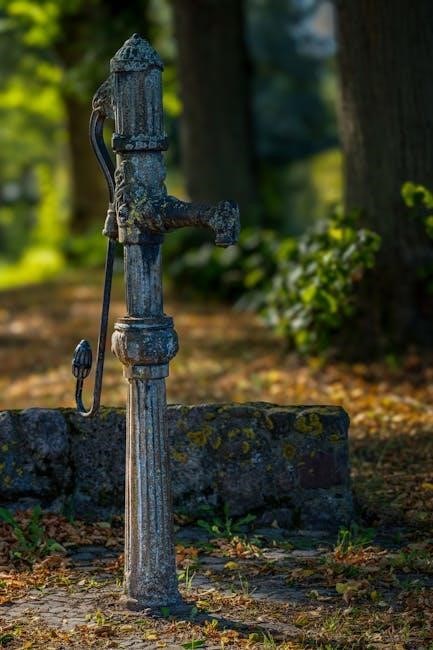
Piston pumps operate on a reciprocating motion, utilizing a piston within a cylinder to create suction and displace water. A handle, when operated, drives the piston, drawing water in through an inlet valve and expelling it through an outlet valve with each stroke. This simple yet effective mechanism makes them remarkably reliable.
Applications are widespread, particularly in shallow well situations and irrigation. They are commonly found in rural areas for domestic water supply, providing a dependable source for drinking and sanitation. Agricultural use includes small-scale irrigation of gardens and fields. Their robust construction and relatively straightforward repair process contribute to their enduring popularity in regions where access to electricity or complex maintenance is limited. They excel where a moderate flow rate is sufficient and the water source isn’t excessively deep.
Rotary Vane Pumps: Functionality and Uses
Rotary vane pumps employ a rotating rotor with extending vanes that sweep along the pump casing, creating chambers of varying volume. As the rotor turns, these chambers draw in water on the suction side and then reduce in volume, forcing the water out on the discharge side. This continuous, rotating action delivers a relatively smooth and consistent flow.
Uses often center around applications needing a gentle pumping action, making them suitable for transferring water with some sediment. They find utility in situations where a consistent, low-pulsation flow is desired, such as certain irrigation setups or transferring water from tanks. While generally less efficient than piston pumps for deep wells, their simpler operation and ability to handle slightly dirty water make them valuable in specific contexts, particularly in areas requiring a reliable, manually operated solution.
Diaphragm Pumps: Advantages and Disadvantages
Diaphragm pumps utilize a reciprocating diaphragm, powered manually, to create suction and discharge water. This design offers significant advantages, notably its ability to handle abrasive or viscous fluids without damage. They excel in situations where self-priming is crucial, as they can efficiently draw water even with air present in the lines. Furthermore, their sealed design minimizes leakage and contamination risks, vital for potable water applications.
However, diaphragm pumps typically deliver lower flow rates compared to piston or rotary vane pumps. The reciprocating motion can also create a pulsating flow, which may be undesirable in certain irrigation systems. Manual operation requires consistent effort, and the diaphragm itself is a wear item requiring periodic replacement, adding to long-term maintenance costs.
Peristaltic Pumps: Specialized Applications
Peristaltic pumps, though less common for general water pumping, offer unique benefits in specific scenarios. They function by compressing a flexible tube with rollers, propelling fluid forward – crucially, the fluid only contacts the tube’s interior, preventing contamination and making them ideal for sensitive applications like dispensing water for medical or laboratory use in remote locations. Manual versions exist, though often smaller scale.
Their strength lies in handling delicate fluids or those requiring strict sterility. However, manual peristaltic pumps generally have very low flow rates and require significant manual force. Tube wear is a concern, necessitating regular replacement, and they are typically more expensive than other manual pump types, limiting their widespread adoption for basic water needs.
Applications of Manual Water Pumps
Manual water pumps are essential for accessing water in off-grid locations, providing a reliable source for drinking, sanitation, and small-scale agricultural needs.
Agricultural Irrigation
Manual water pumps play a critical role in small-scale agricultural irrigation, particularly in regions lacking electricity or extensive infrastructure. They enable farmers to efficiently deliver water directly to crops, boosting yields and ensuring food security. These pumps are ideal for supplemental irrigation during dry spells, supporting vegetable gardens, orchards, and field crops.
The affordability and simplicity of manual pumps make them accessible to resource-constrained farmers. They are especially valuable for irrigating small plots where larger, mechanized systems are impractical or cost-prohibitive. By reducing reliance on rainfall, manual pumps contribute to more consistent crop production and improved livelihoods for farming communities. Furthermore, they promote sustainable water management practices by allowing targeted water application, minimizing waste and maximizing efficiency.
Domestic Water Supply (Rural Areas)
Manual water pumps are frequently essential for providing safe and reliable domestic water supplies in rural areas lacking access to piped water systems. They offer a practical solution for extracting groundwater from wells or boreholes, delivering water for drinking, cooking, and hygiene. This is particularly vital in communities where women and children often bear the burden of water collection from distant sources.
The independence from electricity and minimal maintenance requirements of manual pumps make them ideal for remote locations. They empower households to manage their water needs directly, improving public health and reducing time spent on water-fetching. A readily available water source close to home significantly enhances quality of life, supporting education, economic activities, and overall community well-being.
Emergency Water Source (Disaster Relief)
Manual water pumps prove invaluable as emergency water sources following natural disasters, where infrastructure is often compromised and electricity unavailable. Their portability and operational independence make them crucial for immediate relief efforts, providing access to safe water for affected populations. These pumps can quickly extract water from available sources like rivers, lakes, or shallow wells, bypassing damaged water treatment facilities.
In disaster scenarios, rapid deployment and ease of use are paramount. Manual pumps require no fuel or specialized training, enabling aid workers and community members to establish a vital water supply quickly. This reduces the risk of waterborne diseases and supports basic survival needs, contributing significantly to the overall effectiveness of disaster response and recovery operations.
Livestock Watering
Manual water pumps are essential for providing reliable water access for livestock, particularly in remote pastoral areas lacking electricity or established water systems. These pumps enable farmers and ranchers to efficiently draw water from wells, springs, or streams, ensuring animals remain adequately hydrated, which is critical for their health and productivity.
The simplicity and low maintenance of manual pumps make them ideal for challenging environments. They offer a cost-effective solution compared to installing and maintaining powered pumping systems, reducing operational expenses. Consistent water availability directly impacts livestock weight gain, milk production, and overall farm profitability, making manual pumps a vital investment for sustainable animal husbandry.

Advantages of Manual Water Pumps
Manual pumps deliver a self-sufficient water source, bypassing grid dependence and costs, offering resilience and control over water access for users.
Independence from Electricity
A core benefit of manual water pumps is their complete freedom from electrical power requirements. This is particularly crucial in remote locations, developing countries, or during emergencies where access to electricity is unreliable or nonexistent. Unlike electric pumps, manual pumps operate solely on human physical effort, ensuring a consistent water supply regardless of power outages or grid failures.
This independence translates to significant cost savings, eliminating electricity bills and the expenses associated with maintaining electrical infrastructure. Furthermore, it reduces reliance on external energy sources, promoting self-sufficiency and sustainability. For communities lacking established power grids, manual pumps represent a practical and affordable solution for accessing clean water, improving public health and overall quality of life.
Low Maintenance Requirements
Manual water pumps are renowned for their simple designs and, consequently, minimal maintenance needs. Compared to complex electric pumps, they possess fewer moving parts, reducing the likelihood of breakdowns and the need for specialized repairs. Routine maintenance typically involves periodic lubrication, inspection for wear and tear, and cleaning to prevent clogging.
This simplicity makes them ideal for communities with limited access to skilled technicians or spare parts. Local individuals can often be trained to perform basic maintenance tasks, ensuring the pump’s continued operation. The durability of many manual pump designs, often constructed from robust materials, further contributes to their low lifecycle costs and long-term reliability, making them a sustainable water solution.
Cost-Effectiveness
Manual water pumps represent a remarkably cost-effective water access solution, particularly in resource-constrained settings. The initial purchase price is significantly lower than that of electric or motorized pumps, eliminating the need for substantial upfront investment. Crucially, they bypass ongoing operational costs associated with electricity consumption or fuel purchases, providing long-term savings.
Furthermore, the low maintenance requirements translate to reduced repair expenses. The readily available materials and simple construction often allow for local fabrication of replacement parts, minimizing reliance on expensive imports. This affordability makes manual pumps accessible to a wider range of communities and individuals, fostering self-sufficiency and sustainable water management.
Portability and Ease of Installation
Manual water pumps excel in portability, a critical advantage for remote locations or emergency situations. Their relatively lightweight design and lack of electrical components facilitate easy transportation to areas lacking infrastructure. Installation is straightforward, typically requiring minimal specialized tools or expertise, enabling quick deployment by local communities.
Unlike complex systems demanding professional installation, manual pumps can often be assembled and operational within hours; This simplicity reduces reliance on external technicians and associated costs. The ability to relocate the pump as water source availability changes further enhances its versatility, making it a practical solution for nomadic populations or temporary settlements.

Disadvantages of Manual Water Pumps
Manual water pumps demand significant physical exertion, offer limited water volume, and require consistent maintenance to prevent contamination—key drawbacks to consider.
Physical Effort Required
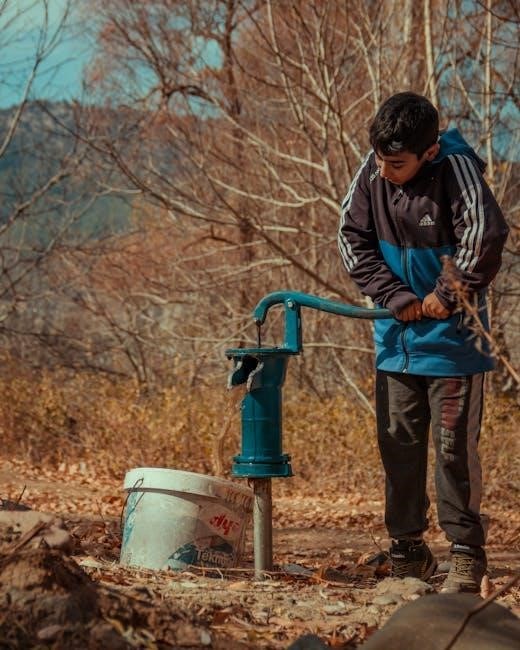
Operating a manual water pump inherently necessitates human physical labor. Unlike electric or engine-powered pumps, these devices rely entirely on the user’s strength and stamina to draw and deliver water. This can be particularly challenging for individuals with limited physical capabilities, the elderly, or when large volumes of water are needed consistently.
The effort involved varies depending on the pump type and the depth of the water source. Piston pumps, for example, require repeated lifting of a handle, while rotary vane pumps demand continuous turning. Sustained operation can lead to fatigue, reducing the pump’s effectiveness and potentially discouraging regular use. Therefore, assessing the user’s physical capacity is crucial when considering a manual pump.
Limited Pumping Capacity
Manual water pumps, by their nature, possess a significantly lower pumping capacity compared to motorized alternatives. The volume of water delivered per stroke or rotation is constrained by human strength and endurance. This limitation makes them less suitable for applications demanding high flow rates, such as large-scale irrigation or supplying water to numerous households simultaneously.
While adequate for basic needs like domestic use or small garden watering, manual pumps struggle to meet substantial water demands efficiently. The rate at which water can be extracted is directly tied to the operator’s effort, meaning consistent high output is difficult to achieve. Careful consideration of water needs is vital when selecting this type of pump.
Potential for Contamination (if not properly maintained)
Manual water pumps, lacking the sealed systems of electric pumps, are more susceptible to contamination if not diligently maintained. Open access points during operation and potential wear on seals can allow bacteria, sediment, or other pollutants to enter the water supply. Regular cleaning and disinfection of pump components are therefore essential.
The source water quality also plays a critical role; pumps drawing from unclean sources require additional filtration. Neglecting maintenance can lead to health risks, particularly in areas with limited access to safe water. Proper hygiene practices and consistent upkeep are paramount to ensure a potable water supply.

Factors Influencing Pump Selection
Choosing a manual pump demands careful consideration of water source depth, flow rate needs, water quality, and budgetary constraints for optimal performance.
Water Source Depth
Determining the depth of your water source is paramount when selecting a manual pump. Shallow wells, typically less than 23 feet (7 meters), can often be effectively served by simple suction pumps. However, deeper wells necessitate pumps capable of lifting water from greater distances, often requiring piston or diaphragm pumps designed for increased lift.
The pump’s maximum lift capacity, often specified by the manufacturer, must exceed the static water level plus any frictional losses within the piping. Ignoring this crucial factor results in a pump unable to draw water, rendering it useless. Accurate measurement of the well’s depth and water level is therefore essential for informed pump selection, ensuring reliable water access.
Required Flow Rate
Assessing your water needs is critical for choosing the appropriate manual pump. Flow rate, measured in gallons per minute (GPM) or liters per minute (LPM), dictates how quickly water can be delivered. A small household requiring water for basic needs will have significantly lower demands than a farm needing irrigation.
Consider peak usage times – when demand is highest. The pump must sustain this flow rate without excessive strain. Manual pumps generally offer lower flow rates than electric pumps, so realistic expectations are vital. Carefully calculating your daily water consumption and anticipated peak demands ensures the selected pump adequately meets your requirements, preventing shortages and frustration.
Water Quality (Sediment, etc;)
The source water’s composition profoundly impacts pump selection and longevity. High sediment levels – sand, silt, or debris – can rapidly wear internal components, reducing efficiency and causing failures. Pumps designed for clear water are unsuitable for turbid sources without pre-filtration.
Consider installing a sediment filter upstream of the pump to protect it. Corrosive water, with high mineral content, may necessitate pumps constructed from corrosion-resistant materials like stainless steel or specialized plastics. Regularly assessing water quality and choosing a pump capable of handling its specific characteristics ensures reliable operation and minimizes maintenance.
Budget Considerations
Initial pump cost is only one aspect of the overall financial commitment. Factor in potential expenses for pre-filtration systems to address sediment-rich water sources, alongside the cost of necessary tools for installation and ongoing maintenance.
While manual pumps generally represent a lower upfront investment compared to electric alternatives, consider the long-term costs of replacement parts – pistons, seals, or diaphragms – and potential repair expenses. A slightly more expensive, durable pump may prove more cost-effective over its lifespan than a cheaper, less robust model requiring frequent repairs or replacement.

Maintenance and Troubleshooting
Regular upkeep ensures longevity and reliable operation; promptly address issues like reduced flow or unusual noises to prevent larger, more costly repairs.
Regular Inspection Procedures
Consistent checks are paramount for sustained pump functionality. Begin with a visual assessment, scrutinizing for any physical damage – cracks, corrosion, or loose components. Examine all connections, ensuring they remain secure and watertight to prevent leaks and maintain optimal pressure.
Inspect the pump’s moving parts, like pistons or vanes, for wear and tear. Lubricate these components as needed, following the manufacturer’s guidelines, to reduce friction and prolong their lifespan. Check the intake screen or filter regularly, clearing away any debris that could obstruct water flow.

Finally, test the pump’s operation frequently, noting any changes in performance – reduced output, increased effort required, or unusual sounds. Document these observations to track potential issues and facilitate timely repairs, ensuring a reliable water supply.
Common Issues and Solutions
Reduced water flow often stems from a clogged intake filter; cleaning it restores capacity. A loss of prime indicates air leaks in the suction line – tighten connections or replace worn seals. Stiff pump action usually signals a lack of lubrication; apply appropriate grease to moving parts.
If the pump struggles to draw water from deeper sources, verify the piston or diaphragm is functioning correctly and isn’t damaged. Persistent leaks require replacing worn washers or O-rings. Unusual noises may indicate internal component wear, necessitating disassembly and inspection.
Remember, preventative maintenance minimizes these issues. Always consult the pump’s manual for specific troubleshooting guidance and safety precautions before attempting repairs.
Winterization Techniques
Protecting manual water pumps from freezing temperatures is crucial for longevity. Begin by completely draining all water from the pump cylinder, pipes, and hoses; Disconnect the pump from the water source and elevate it off the ground to prevent ice formation underneath.
Apply a food-grade antifreeze to the internal components, following manufacturer instructions. Consider covering exposed pipes with insulation to further safeguard against freezing. Store the pump indoors in a dry location if possible.
Regularly inspect the pump during winter for any signs of damage. Proper winterization ensures the pump is ready for immediate use when warmer weather returns, maintaining a reliable water supply.
Future Trends in Manual Water Pump Technology
Innovations focus on ergonomic designs, durable materials, and potential hybrid systems combining manual power with renewable sources like solar energy.
Improved Ergonomics
Addressing user fatigue is paramount in the evolution of manual water pump technology. Traditional designs often necessitate significant physical exertion, limiting sustained use, particularly for vulnerable populations. Future iterations will prioritize biomechanical principles, incorporating features like optimized handle angles, reduced friction mechanisms, and counterbalancing systems.
These enhancements aim to distribute workload more efficiently, minimizing strain on muscles and joints. Lightweight materials will further contribute to ease of operation. Research into adjustable pump configurations, catering to varying user heights and strengths, is also crucial. Ultimately, improved ergonomics will increase accessibility and encourage wider adoption of these vital water sources, especially in resource-constrained settings.
Material Science Advancements
Durability and corrosion resistance are critical for manual water pumps operating in diverse environments. Current advancements focus on replacing traditional metals with high-performance polymers, composites, and specialized alloys. These materials offer increased longevity, reduced weight, and resistance to harsh chemicals and abrasive sediments often found in water sources.
Self-lubricating materials minimize maintenance needs, while innovative coatings prevent biofouling and scaling. Exploring biodegradable or recyclable materials aligns with sustainability goals. Furthermore, research into smart materials that respond to environmental conditions—like temperature or pressure—could optimize pump performance and lifespan. These material innovations will significantly enhance the reliability and cost-effectiveness of manual water pumping systems.
Hybrid Systems (Manual/Solar)
Combining manual operation with solar power addresses the limitations of each individual system, creating a resilient water solution. Solar panels can pre-charge a small battery, assisting the pumping process and reducing physical exertion, particularly during peak demand or low sunlight. This synergy ensures water access even when solar energy is insufficient.
Manual operation serves as a reliable backup during prolonged cloudy periods or system failures. Such hybrid systems are ideal for remote locations where consistent electricity is unavailable. Integrating smart controllers optimizes energy usage, prioritizing solar power while seamlessly switching to manual operation when needed, maximizing efficiency and water security.