Human bodies exhibit remarkable complexity, comprised of eleven interconnected systems. These systems collaborate, ensuring life’s processes, from nutrient absorption to sensory perception, are maintained effectively.
What are Organ Systems?
Organ systems are groups of organs working together to perform vital tasks. These systems – cardiovascular, digestive, nervous, respiratory, skeletal, muscular, endocrine, integumentary, lymphatic, urinary, and reproductive – demonstrate hierarchical organization. Cells form tissues, tissues create organs, and organs collaborate within systems. This intricate arrangement enables efficient bodily functions, ensuring survival and maintaining internal balance, as highlighted in various educational resources.
The Importance of System Interdependence
Human body systems don’t operate in isolation; they exhibit crucial interdependence. For example, the respiratory system provides oxygen utilized by the cardiovascular system for circulation. Digestion fuels the muscular system, while the nervous system coordinates all activities. This collaborative effort, essential for homeostasis, showcases how disruption in one system impacts others, emphasizing their interconnectedness.

The Cardiovascular System
This system, powered by the heart, distributes oxygen, nutrients, and hormones throughout the body via blood vessels, enabling essential organ functions.
Key Organs: Heart, Blood Vessels, Blood
The heart, a muscular pump, drives circulation. Blood vessels – arteries, veins, and capillaries – form the network for blood transport. Blood itself carries oxygen, nutrients, hormones, and waste. These components work in concert; the heart propels blood through vessels, delivering vital substances and removing metabolic byproducts, sustaining cellular functions throughout the body.
Functions: Circulation, Oxygen & Nutrient Delivery
The cardiovascular system’s primary function is circulation, transporting blood throughout the body. This vital process delivers oxygen and essential nutrients to cells, fueling their activities. Simultaneously, it removes carbon dioxide and waste products. Efficient circulation is paramount for maintaining cellular health and overall physiological function, supporting life’s processes.
The Digestive System
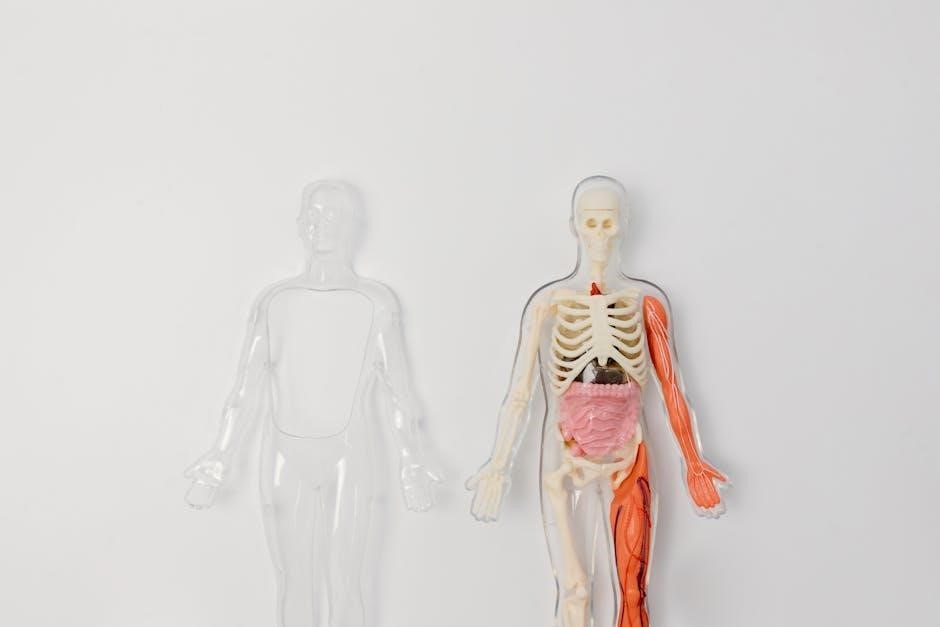
This system breaks down food into absorbable nutrients, utilizing organs like the stomach and intestines. It’s crucial for energy acquisition and body sustenance.
Main Organs: Stomach, Intestines, Liver
The stomach initiates protein digestion, while the small and large intestines absorb nutrients and eliminate waste. The liver plays a vital role, producing bile for fat digestion and detoxifying substances. These organs work in concert to efficiently process ingested materials, ensuring the body receives essential nourishment and eliminates harmful byproducts, contributing to overall health and well-being.
Functions: Breakdown & Absorption of Nutrients
The digestive system’s primary function involves breaking down complex food molecules into simpler substances the body can absorb. This process extracts vital nutrients – carbohydrates, proteins, and fats – fueling cellular activities. Efficient absorption in the intestines delivers these essential components, supporting growth, repair, and overall physiological function.

The Nervous System
This system orchestrates control and communication via electrical signals. It enables sensory perception, coordinating actions and responses, ensuring rapid adjustments to internal and external stimuli.
Central & Peripheral Nervous Systems
The central nervous system—brain and spinal cord—processes information and dictates responses. Conversely, the peripheral nervous system, comprised of nerves, transmits signals between the central system and limbs/organs. This intricate network facilitates rapid communication, enabling coordinated movement, sensation, and autonomic functions. Together, they ensure seamless bodily control and adaptation to the environment, maintaining homeostasis and overall well-being.
Functions: Control, Communication, Sensory Perception
The nervous system orchestrates bodily control via electrical and chemical signals. It enables rapid communication between the brain and body, coordinating actions and responses. Crucially, it governs sensory perception—sight, sound, touch, taste, and smell—allowing us to interact with and interpret our surroundings, ensuring survival and adaptation through constant environmental awareness.
The Respiratory System
This system facilitates vital gas exchange, taking in oxygen for cellular functions and expelling carbon dioxide, a waste product, ensuring bodily survival and energy production.
Key Organs: Lungs, Trachea, Diaphragm
The lungs are the primary organs, enabling oxygen intake and carbon dioxide release. The trachea, or windpipe, serves as the airway, transporting air to and from the lungs. Crucially, the diaphragm, a muscle located below the lungs, contracts and relaxes, facilitating breathing by altering chest cavity volume – a coordinated effort vital for respiration and overall bodily function.
Functions: Gas Exchange (Oxygen & Carbon Dioxide)
The respiratory system’s core function is gas exchange – delivering oxygen to the bloodstream and removing carbon dioxide. This occurs within the lungs’ alveoli, tiny air sacs where oxygen diffuses into blood vessels, while carbon dioxide moves from the blood into the alveoli to be exhaled, sustaining cellular respiration and life itself.

The Skeletal System
Bones, cartilage, and joints provide crucial support, protection for vital organs, and facilitate movement, enabling bodily functions and structural integrity.
Components: Bones, Cartilage, Joints
The skeletal system’s foundation lies in bones, providing rigid support and protecting internal organs. Cartilage cushions joints, reducing friction during movement, while joints—where bones meet—enable flexibility and range of motion. These components work in harmony, allowing for locomotion and maintaining overall bodily structure. Bone marrow within bones produces blood cells, contributing to the circulatory system’s function, showcasing interconnectedness.
Functions: Support, Protection, Movement
The skeletal system provides crucial support for the entire body, maintaining posture and bearing weight. It offers vital protection for delicate organs like the brain, heart, and lungs. Furthermore, it facilitates movement through muscle attachment and leverage, enabling a wide range of physical activities. This system’s functions are essential for survival and interaction with the environment.

The Muscular System
This system encompasses skeletal, smooth, and cardiac muscle tissues, enabling all types of movement. It maintains posture and generates heat, vital for bodily functions and temperature regulation.
Types of Muscle Tissue: Skeletal, Smooth, Cardiac
Skeletal muscle, attached to bones, facilitates voluntary movements like walking. Smooth muscle, found in organ walls, controls involuntary actions such as digestion. Cardiac muscle, exclusive to the heart, powers continuous, rhythmic contractions. These tissues differ in structure, control, and function, yet collectively enable bodily motion and essential physiological processes, demonstrating the body’s intricate design.
Functions: Movement, Posture, Heat Production
The muscular system’s primary role is enabling all types of movement, from walking to facial expressions. Muscles maintain posture, stabilizing the body against gravity. Contractions also generate heat, crucial for maintaining a stable internal body temperature, supporting metabolic functions and overall physiological balance within the organism.
The Endocrine System
This system utilizes glands – pituitary, thyroid, adrenal – to produce hormones. These hormones regulate diverse bodily functions, ensuring coordinated activity and maintaining internal stability.
Key Glands: Pituitary, Thyroid, Adrenal
The pituitary gland, often called the “master gland,” controls other endocrine glands. The thyroid regulates metabolism via hormone production. Adrenal glands manage stress responses, releasing cortisol and adrenaline. These glands, alongside others, orchestrate hormone release, impacting growth, reproduction, and overall bodily equilibrium. Their precise coordination is vital for systemic harmony and proper function.
Functions: Hormone Production & Regulation
The endocrine system’s primary function involves hormone production, acting as chemical messengers. These hormones regulate diverse processes – growth, metabolism, reproduction, and mood. Precise regulation ensures appropriate responses to internal and external stimuli. Feedback loops maintain hormonal balance, preventing over or underproduction, crucial for overall physiological stability and systemic health.
The Integumentary System
This system, encompassing skin, hair, and nails, provides crucial protection. It regulates temperature, prevents dehydration, and acts as a sensory interface with the environment.
Components: Skin, Hair, Nails
The skin, the largest organ, features layers – epidermis, dermis, and hypodermis – offering protection and sensation. Hair provides insulation and sensory input, while nails protect fingertips and aid manipulation. These components work in concert, forming a barrier against pathogens and environmental hazards. Sebaceous glands produce oils, maintaining skin health, and sweat glands regulate temperature through perspiration, vital for homeostasis.
Functions: Protection, Temperature Regulation
The integumentary system shields the body from external threats – pathogens, UV radiation, and physical trauma. It regulates temperature via sweat production, blood vessel dilation/constriction, and insulation from hair. Sensory receptors detect pain, pressure, and temperature, crucial for survival. Maintaining homeostasis relies heavily on these protective and regulatory functions, ensuring optimal internal conditions;
The Lymphatic System
Lymphatic vessels and nodes are vital for immunity and fluid balance. This system defends against disease and returns fluids to the bloodstream, maintaining internal stability.
Key Structures: Lymph Nodes, Lymph Vessels
Lymph nodes, strategically positioned throughout the body, filter lymph fluid, trapping pathogens and cellular debris. Lymph vessels, resembling veins, transport this fluid, containing white blood cells, throughout the system. These vessels collect excess fluid, returning it to circulation. This network plays a crucial role in immune surveillance and maintaining fluid homeostasis, protecting the body from infection and disease.
Functions: Immunity, Fluid Balance
The lymphatic system is vital for immunity, housing and activating lymphocytes to combat infections and diseases. It maintains fluid balance by collecting excess interstitial fluid, preventing edema. This fluid, now lymph, is filtered and returned to the bloodstream, ensuring proper tissue hydration and overall circulatory health, supporting bodily functions.
The Urinary System
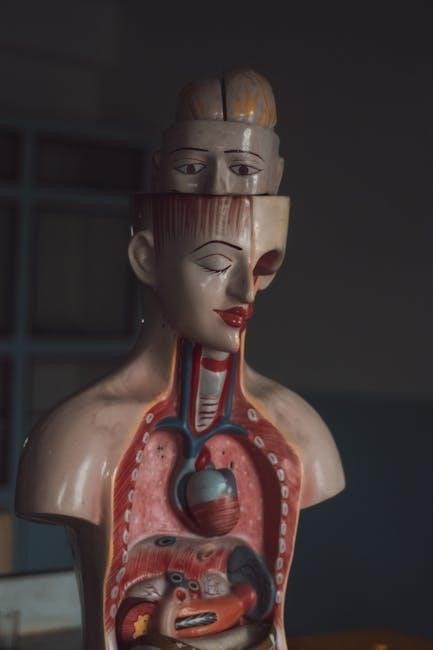
This system, featuring kidneys, bladder, and ureters, efficiently removes metabolic wastes from the body. It also regulates fluid levels and electrolyte balance for homeostasis.
Key Organs: Kidneys, Bladder, Ureters
The kidneys are pivotal, filtering blood to create urine and maintain electrolyte balance. Ureters transport this urine from the kidneys to the bladder for storage. Subsequently, the bladder expands and contracts, expelling waste through the urethra. These organs work in concert to eliminate toxins and regulate body fluid composition, crucial for overall health and homeostasis.
Functions: Waste Removal, Fluid Regulation
The urinary system excels at filtering metabolic waste – urea, creatinine – from the blood, preventing toxic buildup. Simultaneously, it meticulously regulates fluid volume and electrolyte concentrations, maintaining optimal blood pressure and cellular function. This precise balance is essential for sustaining life and overall physiological stability within the body.

The Reproductive System
This system facilitates procreation, ensuring species continuation, and also produces vital hormones influencing development and characteristics, crucial for human life cycles;
Male & Female Reproductive Organs
Male organs include the testes, producing sperm, and the penis, enabling fertilization. Female organs encompass ovaries, generating eggs, the uterus for gestation, and the vagina for childbirth. Hormonal regulation is central; testosterone in males and estrogen/progesterone in females drive development and reproductive cycles. These organs work in concert to ensure successful reproduction, perpetuating the species, and are vital for overall human health and well-being.
Functions: Procreation, Hormone Production
The primary function is enabling procreation, ensuring species continuation through sexual reproduction. Simultaneously, these organs are crucial for hormone production – testosterone in males and estrogen/progesterone in females. These hormones govern sexual development, reproductive cycles, and secondary sex characteristics. Hormonal balance is vital for overall health, impacting mood, bone density, and various physiological processes, demonstrating a system-wide influence.

System Interactions & Homeostasis
Systems constantly interact to maintain internal balance – homeostasis. Collaboration, like the nervous and endocrine systems, ensures coordinated responses to stimuli, vital for survival.
Maintaining Internal Balance
Homeostasis, the body’s ability to regulate its internal environment, is crucial for cell function and overall health. This dynamic equilibrium requires constant adjustments across multiple systems. The urinary system regulates fluid balance, while the respiratory system manages gas exchange. The endocrine system utilizes hormones for long-term regulation, and the nervous system provides rapid responses. Maintaining stable conditions—temperature, pH, and nutrient levels—ensures optimal bodily function and survival.
Examples of System Collaboration
Consider exercise: the muscular system generates movement, fueled by oxygen delivered via the cardiovascular and respiratory systems. The nervous system coordinates these actions, while the endocrine system releases hormones for energy regulation. Simultaneously, the urinary system eliminates metabolic waste. This illustrates how multiple systems intricately cooperate to achieve a single physiological outcome, demonstrating the body’s integrated functionality.

Resources for Further Learning (PDFs & Online)
Numerous educational PDFs and reputable websites, like the Amoeba Sisters, offer detailed explorations of the eleven human body systems and their vital functions.
Recommended Educational Materials
For a comprehensive understanding, explore readily available PDFs detailing the eleven human body systems. The Amoeba Sisters’ updated 2024 video provides a fantastic introductory overview of each system’s functions. Seek out resources outlining the physiological processes and anatomical structures involved. Consider materials covering system interdependence and homeostasis for a holistic view of bodily functions. These resources will enhance your knowledge significantly.
Links to Reputable Websites
Access detailed information on human body systems through educational platforms. Explore the Amoeba Sisters’ channel for engaging videos explaining system functions. Reputable science education websites offer comprehensive PDFs and interactive diagrams. Utilize resources focusing on physiology and anatomy to deepen your understanding of bodily processes and interconnectedness. These links provide reliable, accurate information for learning.