August Wilson’s Fences is a Pulitzer Prize-winning play exploring themes of race, family, and the American Dream through the story of Troy Maxson in 1950s Pittsburgh.
1.1 Overview of the Play
Fences by August Wilson is a powerful drama set in 1950s Pittsburgh, exploring the life of Troy Maxson, a working-class African American man. The play delves into themes of race, family, and the American Dream, revealing Troy’s struggles with his past, his relationships, and societal barriers. Through vivid dialogue and emotional depth, Wilson portrays the complexities of African American life during this era, making Fences a cornerstone of American literature.
1.2 Importance of the Play in American Literature
Fences holds a pivotal place in American literature, offering profound insights into the African American experience during the 1950s. As part of August Wilson’s Pittsburgh Cycle, it captures the struggles of race, identity, and family dynamics. The play’s emotional depth, complex characters, and exploration of the American Dream resonate universally, making it a cornerstone of contemporary drama and a vital contribution to the literary canon.
1.3 Brief Biography of August Wilson
August Wilson was a renowned American playwright and Pulitzer Prize winner, born Frederick August Kittel Jr. in 1945. Growing up in Pittsburgh’s Hill District, his experiences deeply influenced his work. Wilson is best known for his Pittsburgh Cycle, a series of ten plays chronicling African American life in each decade of the 20th century. His works, including Fences, are celebrated for their raw emotional power and historical significance.

Historical Context of “Fences”
Set in 1950s Pittsburgh, Fences reflects the Civil Rights Movement and the Great Migration’s impact on African Americans, exploring racial tensions and societal change during this era.
2.1 The 1950s Setting
The play is set in 1950s Pittsburgh, a time of racial tension and societal change. The 1950s setting reflects the post-war era’s economic growth and emerging Civil Rights Movement. Troy Maxson’s experiences are shaped by the limitations faced by African Americans during this period, including segregation and limited job opportunities. The setting underscores the struggles of black families striving for dignity and equality in a society resistant to change.

2.2 The African American Experience During the 1950s
The 1950s were a pivotal time for African Americans, marked by both hope and hardship. The Civil Rights Movement gained momentum, yet systemic racism persisted. Black communities faced segregation, limited economic opportunities, and social inequality. In Fences, Troy Maxson’s struggles reflect these broader challenges, as he navigates a society that restricts his aspirations and perpetuates racial barriers, shaping his identity and family dynamics in profound ways.
2.3 The Great Migration and Its Impact
The Great Migration reshaped African American life as millions moved from the rural South to Northern cities like Pittsburgh. This mass movement sought better opportunities but often found limited success. In Fences, Troy Maxson’s journey reflects this experience, as he carries the scars of Southern racism while striving for dignity in the North. The migration’s legacy of disrupted families and unfulfilled promises deeply influences Troy’s worldview and his complex relationships with loved ones.
Plot Summary of “Fences”
Fences follows Troy Maxson, a complex patriarch, as he navigates his troubled past, strained relationships, and the bitter realities of racism in 1950s America.
Act 1 introduces the Maxson family, focusing on Troy, a charismatic but flawed patriarch, his wife Rose, and their son Cory. Set in 1950s Pittsburgh, the act establishes the family’s dynamics, revealing Troy’s pride, his complicated relationship with his sons, and his wife’s quiet strength. Through dialogue, Wilson reveals the tensions and aspirations of the Maxson household, setting the stage for the conflicts and revelations that follow.
3.2 Act 2: The Conflict Between Troy and Cory
Act 2 intensifies the tension between Troy and Cory, highlighting their generational and ideological clash. Troy’s rigid views on responsibility and masculinity conflict with Cory’s desire for independence and self-determination. The act explores Troy’s past traumas and how they shape his parenting, while Cory struggles to assert his identity. Rose serves as a mediator, but the conflict escalates, revealing deep emotional wounds and the complexities of their relationship, ultimately leading to Cory’s defiance and Troy’s hardened resolve.
3.3 Act 3: The Resolution and Troy’s Redemption
Act 3 brings resolution as the Maxson family confronts Troy’s legacy after his death. Cory, now a Marine, initially resists attending the funeral but ultimately decides to honor his father. Rose, embodying strength and forgiveness, helps the family heal. The fence, now completed, symbolizes unity and protection. Troy’s past mistakes are acknowledged, but his loved ones find closure, allowing them to move forward. The act underscores themes of redemption, family bonds, and the possibility of healing through acceptance and forgiveness.

Main Characters in “Fences”
The play centers around Troy Maxson, a complex protagonist, his wife Rose, their son Cory, and other key figures like Gabriel, Jim Bono, and Lyons.
4.1 Troy Maxson: The Protagonist
Troy Maxson is the flawed but formidable protagonist of Fences. A former Negro League baseball player, Troy struggles with racism, family expectations, and his own pride. His complex personality, shaped by a traumatic childhood and societal barriers, often leads to harsh decisions. Troy’s relationship with his sons, particularly Cory, reveals his deep-seated fears and desire to protect them from the injustices he faced. His character embodies both strength and vulnerability, making him a tragic yet relatable figure.
4.2 Rose Maxson: The Matriarch
Rose Maxson is the emotional anchor of the Maxson family, embodying strength, resilience, and unconditional love. As Troy’s wife, she navigates his flaws while striving to maintain family unity. Her quiet determination and practical wisdom often mediate the conflicts between Troy and their son Cory. Rose’s own desires and sacrifices are central to her character, revealing a woman torn between loyalty and the pursuit of her own happiness in a world filled with limitations and disappointments.
4.3 Cory Maxson: The Son
Cory Maxson is the teenage son of Troy and Rose, struggling to find his place in a world shaped by his father’s rigid expectations. His desire to play football and forge his own path clashes with Troy’s disapproval, rooted in bitter experiences of racism and failed opportunities. Cory’s journey reflects his efforts to break free from Troy’s shadow while navigating the complexities of family loyalty, identity, and the weight of his father’s flawed guidance.
4.4 Other Key Characters
Other key characters in Fences include Gabriel, Troy’s mentally challenged brother, who embodies innocence and tragedy; Lyons, Troy’s son from a previous relationship, representing generational tension; and Jim Bono, Troy’s loyal friend and coworker, who serves as a voice of reason. These characters enrich the narrative, providing deeper insights into Troy’s world and the broader themes of family, responsibility, and redemption.

Themes in “Fences”
Central themes in Fences include the pursuit of the American Dream, the impact of racism, and the complexities of family dynamics and personal redemption.
5.1 The American Dream
The American Dream is a central theme in Fences, symbolizing the elusive aspirations of African Americans in the 1950s. Troy Maxson’s journey reflects the Dream’s unattainability due to systemic racism and economic inequality. His disillusionment contrasts with his son Cory’s cautious optimism, highlighting generational divides. The play critiques the notion of the Dream as unachievable for many, emphasizing the barriers that perpetuate inequality and limit opportunities for upward mobility.
5.2 Racism and Discrimination
Racism and discrimination are pervasive themes in Fences, shaping Troy Maxson’s life and worldview. The play highlights systemic racism’s impact on African Americans, from limited job opportunities to segregated sports leagues. Troy’s bitterness stems from being denied a baseball career due to racial barriers, fueling his resentment and affecting his relationships. Wilson portrays how racism perpetuates cycles of anger and disillusionment, resonating deeply with the broader African American experience during the 1950s.
5.3 Family and Responsibility
Family and responsibility are central to Fences, as Troy Maxson struggles to balance his duties as a father and husband. His complex relationship with Cory reflects his own fractured childhood, while Rose embodies stability and unconditional love. Troy’s rigid ideas of responsibility often clash with his inability to emotionally connect, highlighting the tension between providing for and nurturing his family. The play explores how societal expectations and personal flaws shape family dynamics, revealing both the burdens and the bonds of responsibility.
5.4 Redemption and Forgiveness
Redemption and forgiveness are pivotal in Fences, as characters confront past mistakes and seek reconciliation. Troy’s infidelity and emotional distance from his family create a rift, but his death and the revelation of his humanity offer a path to forgiveness. Rose’s unwavering strength and Cory’s eventual understanding illustrate the possibility of healing. The play suggests that redemption is not about erasing the past but acknowledging it and moving forward with compassion and understanding.
Symbolism in “Fences”
Symbolism in Fences enriches the narrative, with objects like the fence, baseball bat, and garden representing emotional barriers, lost opportunities, and the quest for identity and connection.
6.1 The Fence as a Symbol
The fence in August Wilson’s Fences symbolizes both division and unity, reflecting Troy’s internal conflicts and his relationship with his family. It represents emotional barriers built to protect and isolate, while also embodying Rose’s desire for security and unity. The fence serves as a metaphor for the characters’ struggles with identity, responsibility, and reconciliation, highlighting the complexities of human connections and the quest for understanding.
6.2 The Baseball Bat
The baseball bat in Fences symbolizes Troy’s past glory and unfulfilled potential as a athlete, representing his pride and the racial barriers that halted his career. It also signifies his connection to his son Cory, as the bat becomes a tool for both physical and emotional distance. The bat embodies Troy’s struggle with identity, his longing for recognition, and the generational conflicts that shape his relationships, ultimately reflecting his complex journey toward self-awareness and redemption.
6.3 The Garden
The garden in Fences symbolizes hope, renewal, and the connection to heritage. Rose’s tending of the garden reflects her resilience and nurturing spirit, contrasting the harsh realities of her life. It also represents the Maxson family’s struggle for growth and stability in a world filled with obstacles. The garden serves as a metaphor for the characters’ inner lives, highlighting their longing for beauty and transcendence amidst the challenges of racism and personal conflict, offering a glimpse of potential redemption and healing.
The Significance of the Title “Fences”
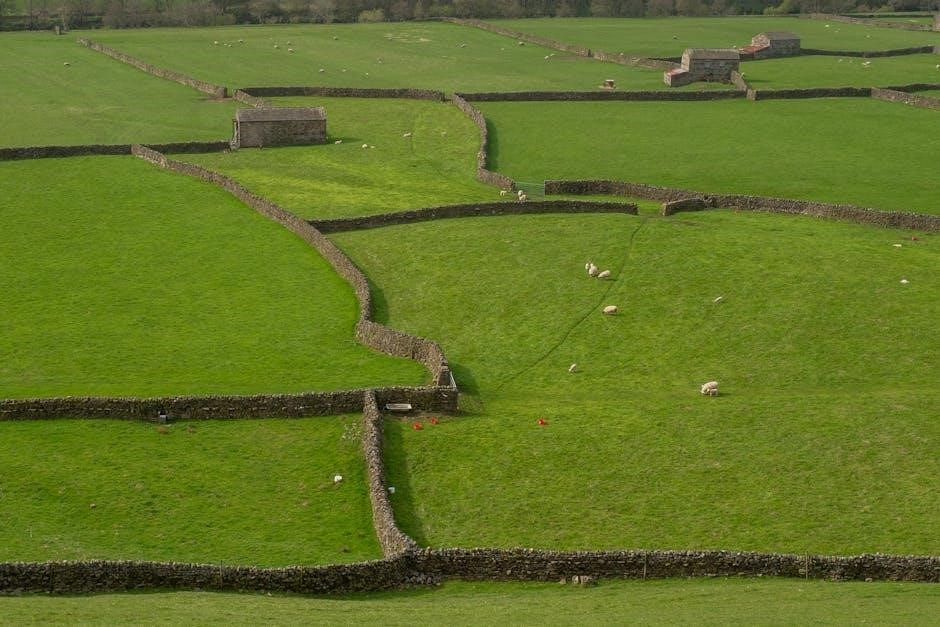
The title “Fences” symbolizes the emotional and physical barriers within the Maxson family, reflecting Troy’s need for protection and control, while also representing the characters’ inner struggles and the play’s themes of isolation and redemption.

7.1 Literal and Figurative Meanings
The title “Fences” carries both literal and figurative significance. Literally, it refers to the physical fence Troy builds around his home, symbolizing protection and boundaries. Figuratively, the fence represents emotional barriers, isolation, and the complexities of relationships within the Maxson family. It also reflects Troy’s internal struggles and his attempts to shield himself and his family from the harsh realities of racism and personal failures, while simultaneously isolating them from genuine connection and understanding.
7.2 The Fence as a Metaphor
The fence in August Wilson’s Fences serves as a powerful metaphor for the emotional and psychological barriers within the Maxson family. It symbolizes Troy’s attempts to control and protect his family, while also isolating himself from their true needs. The fence represents the divisions caused by unresolved past traumas, unspoken resentments, and the struggle for identity. It also mirrors the societal fences of racism and discrimination that confine Troy’s aspirations and shape his worldview, highlighting the tension between protection and confinement.

“Fences” as a PDF Resource
August Wilson’s Fences is widely available in PDF format, offering readers convenient access to the play for study, analysis, and appreciation of its profound themes and characters.
8.1 Availability and Accessibility
The PDF version of Fences is widely available through online retailers, libraries, and educational platforms, making it easily accessible for readers worldwide. Digital formats ensure convenience, allowing readers to adjust font sizes and access the text on various devices. This accessibility has helped broaden the play’s reach, enabling students, scholars, and enthusiasts to engage with Wilson’s work effortlessly. The PDF format also preserves the play’s original structure and dialogue, maintaining its artistic integrity for digital audiences.
8.2 Benefits of Reading the Play in PDF Format
Reading Fences in PDF format offers enhanced portability and convenience, allowing access on multiple devices. The digital version enables easy highlighting, annotating, and searching, which is ideal for study or analysis. Additionally, PDFs preserve the play’s original formatting, ensuring a seamless reading experience. This format is particularly beneficial for students and researchers, as it facilitates quick reference and in-depth exploration of Wilson’s work without compromising the artistic integrity of the text.
Analysis of the Play’s Structure
Wilson’s Fences employs a non-linear narrative, blending flashbacks and present-day dialogue to explore themes of identity and redemption, creating a layered, emotionally resonant dramatic experience.
9.1 Dramatic Structure
Fences is structured in two acts, with a non-linear narrative that blends past and present. The play’s tension builds through dialogue and flashbacks, revealing Troy’s inner conflicts. Set primarily in the Maxson family’s backyard, the physical fence symbolizes emotional barriers and aspirations. Wilson’s use of dramatic pauses and lyrical language enhances the play’s emotional depth, while the tight setting focuses attention on character dynamics and thematic exploration, creating a powerful, intimate theatrical experience.
9.2 Use of Dialogue and Language
August Wilson’s dialogue in Fences is rich, lyrical, and deeply rooted in African American Vernacular English. The language reflects the characters’ emotions, histories, and cultural identities. Troy’s speeches, often poetic and metaphorical, reveal his inner struggles and philosophies. The dialogue drives the plot, exposes conflicts, and builds tension, while also showcasing Wilson’s mastery of rhythm and tone. This linguistic style creates authenticity, making the characters’ voices resonate powerfully with audiences, enhancing the play’s emotional and cultural impact.
The Play’s Impact on Audiences
August Wilson’s Fences deeply resonates with audiences, evoking strong emotions and sparking reflections on race, family, and identity, leaving a lasting cultural and emotional impact.
10.1 Emotional Resonance
August Wilson’s Fences captivates audiences with its profound emotional depth, exploring Troy’s inner struggles, family dynamics, and the poignant pursuit of the American Dream, evoking empathy and reflection.
10.2 Cultural Significance
Fences holds profound cultural significance as a landmark in American theater, offering a raw portrayal of African American life in the 1950s. It captures the struggles of systemic racism, the pursuit of the American Dream, and the legacy of August Wilson’s Pittsburgh Cycle. The play’s unflinching honesty and universal themes resonate deeply, making it a vital work for understanding the African American experience and its enduring impact on society and literature.

Discussion Questions for “Fences”
How does Troy’s past shape his relationships? What role does the fence symbolize? How does the play explore the American Dream? What lessons can be learned from Cory’s journey?
11.1 Character Motivations
What motivates Troy to build the fence, and how does it reflect his inner struggles? How does Rose’s loyalty to her family influence her decisions? Why does Cory resist Troy’s authority, and what does this reveal about generational conflict? How do the characters’ past experiences shape their present actions? What drives Troy’s complicated relationship with his father and his own sons? How do these motivations tie into the play’s themes of identity and responsibility?

11.2 Theme Exploration
How does the play portray the American Dream, and what obstacles prevent Troy from achieving it? In what ways does racism shape the characters’ lives and opportunities? How does the theme of family responsibility influence Troy’s decisions, and what are the consequences? What role does redemption play in the story, particularly for Troy? How do these themes intersect to create a deeper understanding of the characters and their struggles?
11.3 Symbolism and Interpretation
- What does the fence symbolize in the play, and how does its construction reflect Troy’s inner struggles?
- How does the baseball bat serve as a symbol of Troy’s past and his relationship with Cory?
- In what ways does the garden represent Rose’s role and the nurturing aspects of the family?
- How do these symbols collectively enhance the play’s exploration of themes like redemption and responsibility?
Conclusion
August Wilson’s Fences remains a powerful exploration of race, family, and the American Dream, offering profound insights into human resilience and societal challenges, ensuring its lasting relevance.
12.1 Summary of Key Points
August Wilson’s Fences delves into the complexities of the Maxson family, exploring themes of race, family, and the American Dream. Set in 1950s Pittsburgh, the play examines Troy’s struggles with identity, responsibility, and redemption. Through vivid dialogue and symbolic elements like the fence, Wilson highlights the emotional and cultural barriers faced by African Americans. The play’s structure and character dynamics underscore its profound impact on understanding racial and familial tensions in American society.
12.2 Final Thoughts on the Play’s Relevance
August Wilson’s Fences remains a powerful exploration of race, identity, and family, offering timeless insights into the African American experience. Its themes of systemic racism, generational trauma, and the pursuit of the American Dream resonate deeply today. Wilson’s masterful storytelling continues to inspire reflection and dialogue, cementing Fences as a cornerstone of American literature and a vital work for understanding the complexities of human struggle and resilience.