Concrete blocks are versatile, durable building materials widely used in construction. They come in various types, including solid, hollow, and interlocking designs, offering strength, thermal efficiency, and cost-effectiveness. Modern innovations include recycled aggregates for sustainable solutions.
Classification of Concrete Blocks
Concrete blocks are classified into solid, hollow, interlocking, and insulated types. Solid blocks are dense and strong, while hollow blocks contain voids for lightweight construction. Interlocking blocks offer mortarless assembly, and insulated blocks enhance thermal efficiency.
Solid Concrete Blocks

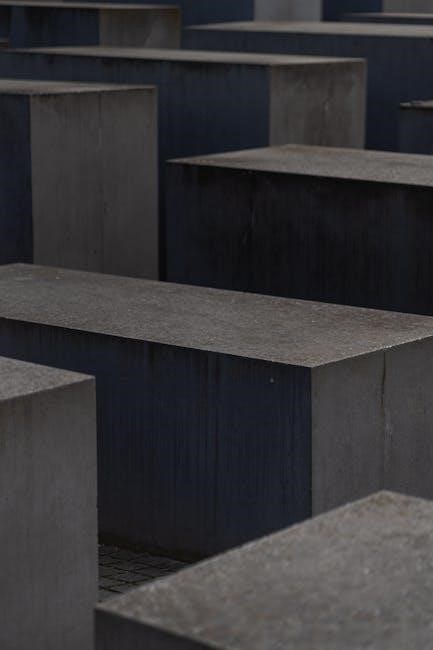
Solid concrete blocks are dense and highly durable, making them ideal for load-bearing walls and structural applications. They are manufactured without voids, ensuring maximum strength and resistance to stress. These blocks are typically heavier than hollow blocks and provide excellent thermal mass, helping regulate indoor temperatures. Their solid structure makes them resistant to fire and pests, enhancing safety and longevity. Solid concrete blocks are widely used in foundations, retaining walls, and high-load construction projects. They are also favored for their ability to support heavy weights and withstand harsh environmental conditions. Despite their higher weight, solid blocks remain a popular choice due to their reliability and performance in critical structural roles. Their uniform size and smooth finish also contribute to faster construction timelines. Overall, solid concrete blocks are a fundamental component in building sturdy and enduring structures.
Hollow Concrete Blocks
Hollow concrete blocks are lightweight, versatile, and widely used in construction for non-load-bearing walls, partitions, and insulation purposes. These blocks contain voids or hollow spaces, which reduce their weight and improve thermal insulation properties. They are often manufactured using lightweight aggregates, making them easier to handle and transport. Hollow blocks are ideal for applications where weight reduction is essential, such as in multi-story buildings or structures with limited load capacity. Their hollow cores can also be filled with concrete or steel reinforcement to enhance strength and stability. Despite their lower density, hollow concrete blocks provide good soundproofing and thermal efficiency, making them a popular choice for modern construction projects. They are also cost-effective and environmentally friendly, as they require less material to produce compared to solid blocks. Overall, hollow concrete blocks strike a balance between functionality, sustainability, and affordability, making them a key component in contemporary building design.
4.1 Stretcher Blocks
Stretcher blocks are a type of hollow concrete block commonly used in wall construction. They are characterized by their rectangular shape and longer face, which provides a larger surface area for bonding with mortar. These blocks are designed to be laid lengthwise in walls, offering enhanced structural integrity and load-bearing capacity. Stretcher blocks are widely used in the construction of load-bearing walls, partitions, and external facades due to their strength and durability. They are also cost-effective and easy to install, making them a popular choice for both residential and commercial projects. The hollow cores of stretcher blocks can be filled with concrete or steel reinforcement to further increase their strength and stability. Additionally, their design allows for better thermal insulation and soundproofing, contributing to energy efficiency and comfort in buildings. Overall, stretcher blocks are a fundamental component in modern construction, providing a balance of strength, versatility, and economic benefits.
4.2 Corner Blocks
Corner blocks are specialized concrete blocks designed to form the corners of walls, providing a right-angle connection between two walls. These blocks have two adjacent faces at 90 degrees, ensuring precise alignment and structural integrity. They are typically used in both load-bearing and non-load-bearing walls to create strong and durable corners. Corner blocks are essential for maintaining the stability and alignment of walls, especially in multi-story buildings and complex structures. Their design allows for easy installation, as they fit seamlessly with adjacent blocks and mortar. Additionally, corner blocks contribute to the overall aesthetic appeal of a building by creating clean, sharp edges. They are also cost-effective, as they eliminate the need for cutting blocks to form corners. Corner blocks are widely used in residential, commercial, and industrial construction projects, offering both functional and visual benefits. Their durability and versatility make them a crucial component in modern building practices, ensuring long-lasting and structurally sound walls.
Interlocking Concrete Blocks
Interlocking concrete blocks (ICBs) are innovative building materials designed with unique shapes and surfaces that allow them to connect without the need for mortar. This mortarless mechanism simplifies construction, reduces costs, and accelerates project timelines. ICBs are produced using recycled aggregates, promoting sustainability and environmental conservation; They are ideal for constructing wallettes and other structures, as they can be easily stacked to form strong and durable walls. Recent studies highlight the effectiveness of ICBs in reducing construction time and environmental impact. These blocks are tested for strength, including axial compressive loading, ensuring their reliability in various applications. Interlocking concrete blocks are a modern solution for eco-friendly and efficient building practices, offering both structural integrity and cost savings. Their versatility makes them suitable for a wide range of construction projects, from residential buildings to infrastructure development. By eliminating the need for mortar, ICBs not only streamline the construction process but also contribute to a more sustainable future in the building industry.
Insulated Concrete Blocks
Insulated concrete blocks are specialized blocks designed to provide enhanced thermal efficiency in construction. These blocks are manufactured with integrated insulation materials, such as lightweight aggregates or hollow cores, which reduce heat transfer and improve energy efficiency. They are widely used in building walls, foundations, and other structures where thermal performance is critical. Insulated concrete blocks are particularly beneficial in climates with extreme temperatures, as they help maintain consistent indoor conditions while reducing heating and cooling costs. Their lightweight design also makes them easier to handle and install compared to solid blocks. Additionally, these blocks contribute to eco-friendly construction by minimizing energy consumption over a building’s lifespan. With their unique combination of strength, durability, and thermal insulation, insulated concrete blocks are a popular choice for modern, energy-efficient buildings. They are an essential component in sustainable construction practices, offering both functional and environmental benefits. Their versatility and performance make them a key option for architects and builders seeking to balance cost and efficiency.
Materials Used in Concrete Blocks
Concrete blocks are made from a mix of cement, aggregates, water, and additives. Cement binds the mixture, aggregates provide strength, water hydrates the cement, and additives enhance specific properties like durability and workability.
Cement
Cement is the primary binding agent in concrete blocks, responsible for holding the mixture of aggregates, water, and additives together. The most commonly used type is Portland cement, known for its strength and durability. It reacts with water to form a hard, cohesive paste that binds the aggregates, creating a solid structure. The quality and quantity of cement significantly influence the strength, durability, and water resistance of the blocks. During manufacturing, the cement-to-aggregate ratio is carefully controlled to ensure optimal performance. Additionally, the curing process, which involves controlled moisture and temperature, enhances the hydration of cement, improving the block’s mechanical properties. The use of supplementary cementitious materials, such as fly ash or silica fume, can further enhance the sustainability and performance of concrete blocks. Proper handling and storage of cement are essential to maintain its effectiveness, as exposure to moisture can reduce its binding capacity. Thus, cement plays a critical role in determining the overall quality and functionality of concrete blocks in construction.
Aggregates
Aggregates are a fundamental component of concrete blocks, making up a significant portion of the material. They consist of natural or recycled materials such as sand, gravel, crushed stone, or lightweight alternatives like shale, clay, or slate. Aggregates provide bulk, strength, and help reduce shrinkage in the concrete mixture. Their size, shape, and gradation are critical, as they influence the block’s density, durability, and bonding with cement. Natural aggregates are the most commonly used due to their availability and cost-effectiveness, while lightweight aggregates are chosen for their thermal insulation properties. Recycled aggregates, such as crushed concrete or brick, are increasingly being used to promote sustainability and reduce environmental impact. The quality of aggregates directly affects the performance of the concrete blocks, with proper gradation ensuring minimal voids and optimal bonding with the cement paste. This balance is essential for achieving the desired strength and durability in various construction applications. Aggregates thus play a vital role in the structural integrity and versatility of concrete blocks. Their selection and processing are carefully managed during manufacturing to ensure consistent and reliable results.
Water
Water is a critical component in the production of concrete blocks, playing a vital role in the hydration of cement and the workability of the mixture. The quality and quantity of water used significantly impact the strength, durability, and finish of the blocks. Clean, potable water is typically recommended to ensure proper chemical reactions and prevent contamination. Impurities in water, such as excessive salts or acids, can adversely affect the cement’s performance and the block’s structural integrity. The water-to-cement ratio is carefully controlled during mixing to achieve the desired consistency and prevent issues like shrinkage or porosity. Additionally, water helps in compacting the mixture during the molding process, ensuring dense and uniform blocks. Proper hydration is essential for curing, where water continues to react with cement, strengthening the block over time. The precise management of water in both mixing and curing stages is crucial for producing high-quality concrete blocks that meet construction standards. Thus, water is not just a filler but a key enabler of the block’s performance and longevity.
Additives
Additives are chemical substances added to the concrete mixture to enhance specific properties of the blocks. They play a crucial role in improving workability, strength, and durability. Common additives include air-entraining agents, which create microscopic air bubbles to improve freeze-thaw resistance, and accelerators to speed up the setting process. Retarders are used to slow down curing in hot weather, while plasticizers increase flowability without adding more water. Some additives, like coloring agents, are used to achieve specific aesthetic effects. These chemicals are carefully measured and mixed to ensure they do not compromise the structural integrity of the blocks. Additives are particularly useful in specialized applications, such as high-strength or insulated blocks, where enhanced performance is required. By tailoring the mixture with additives, manufacturers can produce concrete blocks that meet specific construction needs, whether for load-bearing walls, thermal insulation, or decorative purposes. Proper use of additives ensures the blocks are both functional and durable, making them versatile for various building projects. Their inclusion has become essential in modern concrete block manufacturing to address diverse engineering and environmental challenges.

Manufacturing Process of Concrete Blocks
The process involves mixing raw materials, molding the mixture into block shapes, and curing them to enhance strength. Innovations include using recycled aggregates for sustainability and improved efficiency in construction.

Mixing
Mixing is the initial step in concrete block manufacturing, involving the combination of cement, aggregates, water, and additives; The proportions of these materials are carefully measured to ensure the desired strength and durability of the blocks. Advanced techniques now incorporate recycled aggregates, reducing environmental impact while maintaining quality. This process is critical for achieving uniformity in the mixture, which directly affects the final product’s performance. Modern innovations, such as optimized mixing protocols, aim to enhance efficiency and reduce production time. The use of recycled materials not only supports sustainability but also lowers costs, making concrete blocks more accessible for various construction projects. Proper mixing ensures that the concrete is workable and can be molded into the desired shapes effectively. This step lays the foundation for the entire manufacturing process, emphasizing the importance of precision and quality control.
Molding
Molding is a critical step in concrete block manufacturing where the mixed concrete is shaped into the desired form. The mixture is poured into molds, which can be stationary or vibrating, depending on the type of block being produced. Vibrating molds help eliminate air pockets, ensuring a dense and uniform structure. The molds are designed to create specific block shapes, such as solid, hollow, or interlocking designs. For interlocking blocks, the molds include features like tongues and grooves to facilitate mortarless construction. After pouring, the blocks are allowed to set and harden in the molds before being removed. This process is essential for achieving the precise dimensions and surface finish required for construction. Modern manufacturing systems often use machine-operated molds for higher efficiency and consistency. The molding step directly impacts the quality and durability of the final product, making it a key part of the production process; Proper molding ensures that the blocks meet structural and aesthetic requirements for various building applications.
Curing
Curing is the final and crucial step in the manufacturing process of concrete blocks, ensuring the material reaches its optimal strength and durability. After molding, the blocks are subjected to controlled environmental conditions to facilitate proper hydration of the cement. This process typically involves maintaining consistent moisture and temperature levels. Water curing, where blocks are sprayed or submerged in water, is a common method. Alternatively, steam curing can be used to accelerate the process, especially in industrial settings. The duration of curing varies depending on the type of concrete and environmental factors but generally lasts several days. Proper curing prevents cracks, enhances surface finish, and improves the overall structural integrity of the blocks. Improper curing can lead to weaker blocks that may not perform well under load. Modern facilities often use automated systems to monitor and control curing conditions, ensuring consistency and quality. This step is vital for producing high-performance concrete blocks suitable for various construction applications.

Applications of Concrete Blocks in Construction
Concrete blocks are widely used in constructing load-bearing and non-load-bearing walls, foundations, and partitions. They are ideal for building fences, retaining walls, and decorative features due to their strength, durability, and versatility in design and application.
Load-Bearing Walls
Load-bearing walls are structural elements designed to support heavy weights, including floors, roofs, and other building components. Concrete blocks are ideal for constructing these walls due to their high compressive strength and durability. Solid concrete blocks, in particular, are widely used for load-bearing applications because of their dense structure, which provides excellent stability and resistance to structural stress; These blocks are commonly employed in both residential and commercial construction, offering a reliable and long-lasting solution for supporting heavy loads. Their uniform size and shape ensure precise alignment, which is critical for maintaining the integrity of load-bearing structures. Additionally, concrete blocks are fire-resistant and can withstand extreme weather conditions, making them a practical choice for building safe and durable load-bearing walls. Their versatility allows them to be used in various architectural designs while ensuring the structural safety of the building. Overall, concrete blocks remain a preferred material for load-bearing walls due to their strength, reliability, and cost-effectiveness.
Non-Load Bearing Walls
Non-load bearing walls are structural elements that do not support vertical loads from a building but serve to partition spaces, provide insulation, and enhance aesthetics. These walls are often constructed using hollow concrete blocks, which are lighter and more suitable for such applications. Hollow blocks contain voids that can be filled with insulation materials, improving thermal efficiency and reducing noise transmission. They are also easier to handle and install compared to solid blocks, making them a cost-effective option for non-load bearing walls. Additionally, hollow concrete blocks can be manufactured with recycled aggregates, aligning with sustainable construction practices. Their mortarless stacking mechanism further simplifies construction processes, saving time and labor. Non-load bearing walls made from hollow concrete blocks are ideal for internal partitions, exterior cladding, and other non-structural applications. They offer a balance of strength, durability, and versatility, making them a popular choice in modern construction projects. Their fire-resistant properties and ability to withstand environmental factors also contribute to their widespread use in various building types.
Specialized Applications
Concrete blocks are increasingly used in specialized applications due to their versatility and durability. One notable application is in the construction of retaining walls, where interlocking concrete blocks (ICBs) are employed to create stable structures without the need for mortar. These blocks are designed to withstand significant loads and environmental stresses, making them ideal for landscaping and erosion control. Another specialized use is in the fabrication of wallettes, which are lightweight, mortarless walls built using ICBs containing recycled aggregates. These structures not only reduce construction time and costs but also align with environmental sustainability goals. Additionally, concrete blocks are used in sound barriers along highways to mitigate noise pollution; Their hollow cores can be filled with insulating materials to enhance sound absorption. Decorative concrete blocks are also used in architectural features, such as facades and partitions, adding aesthetic value to buildings. These specialized applications highlight the adaptability of concrete blocks in meeting diverse construction needs while promoting sustainable practices.
Advantages of Using Concrete Blocks
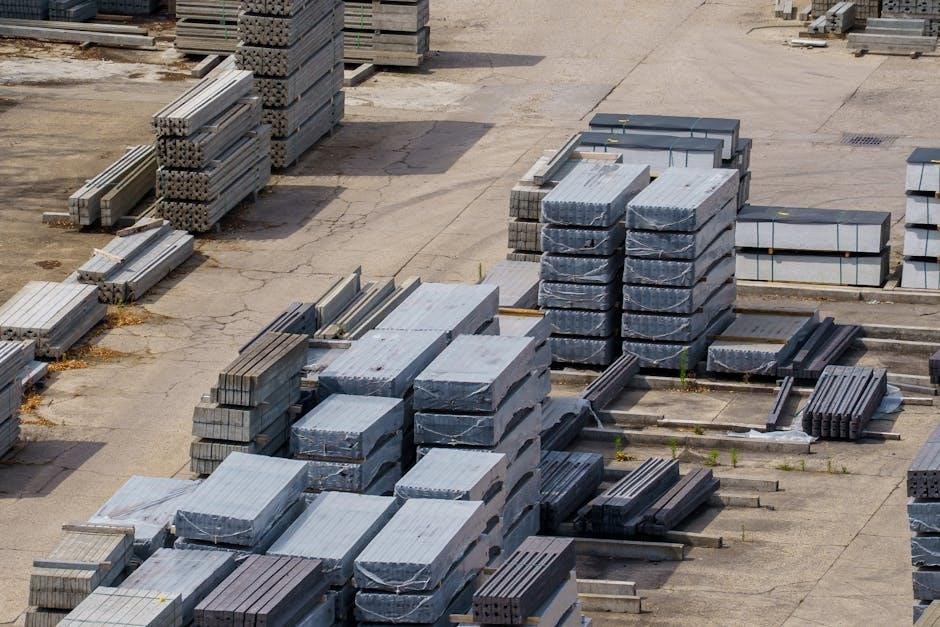
Concrete blocks offer numerous advantages, making them a popular choice in construction. Their high strength and durability ensure long-lasting structures, capable of withstanding harsh environmental conditions. They are cost-effective, as they reduce construction time and labor costs due to their modular design and ease of installation. Concrete blocks also provide excellent thermal efficiency, as their dense structure helps regulate indoor temperatures, reducing heating and cooling needs. Additionally, they are fire-resistant, enhancing building safety. The use of recycled aggregates in modern concrete blocks aligns with sustainable construction practices, minimizing environmental impact. Their versatility allows for various applications, from load-bearing walls to decorative features. Low maintenance and resistance to pests and mold further add to their appeal. Overall, concrete blocks combine strength, efficiency, and sustainability, making them a preferred material in both residential and commercial projects. Their adaptability and durability ensure they remain a cornerstone of modern construction.
Disadvantages of Concrete Blocks
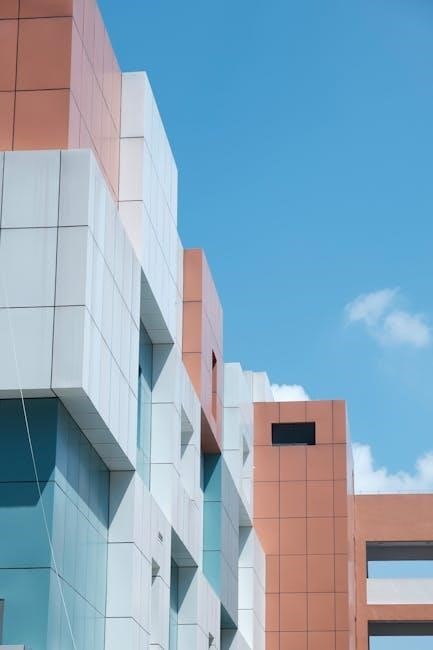
Despite their popularity, concrete blocks have several drawbacks. One major disadvantage is their heavy weight, which can increase transportation costs and require stronger foundations. They also have high initial costs compared to other building materials. Additionally, concrete blocks lack flexibility in design, as they are typically molded into standard shapes and sizes, limiting customization. The material’s porous nature can lead to moisture absorption, potentially causing issues like mold growth or water seepage. Furthermore, the production of concrete blocks requires significant energy, contributing to environmental concerns. The use of cement, a key component, has a high carbon footprint. Skilled labor is often needed for proper installation, which can be a challenge in areas with limited expertise. Lastly, while durable, concrete blocks can crack under extreme stress or seismic activity, requiring costly repairs. Despite these challenges, concrete blocks remain a widely used material due to their overall strength and versatility. Their drawbacks, however, should be considered in construction planning.
In conclusion, concrete blocks are a fundamental and versatile construction material, offering numerous benefits such as durability, strength, and cost-effectiveness. Their variety, including solid, hollow, and interlocking designs, caters to diverse building needs. Innovations like recycled aggregates and insulated blocks highlight their potential for sustainable and modern applications. While they present challenges such as high initial costs and environmental impacts, advancements in manufacturing and design continue to address these issues. Concrete blocks remain a cornerstone in construction, balancing functionality and efficiency. Their adaptability ensures they will remain a key material in building projects for years to come.